Travel Packing System: How to Build One to Sell
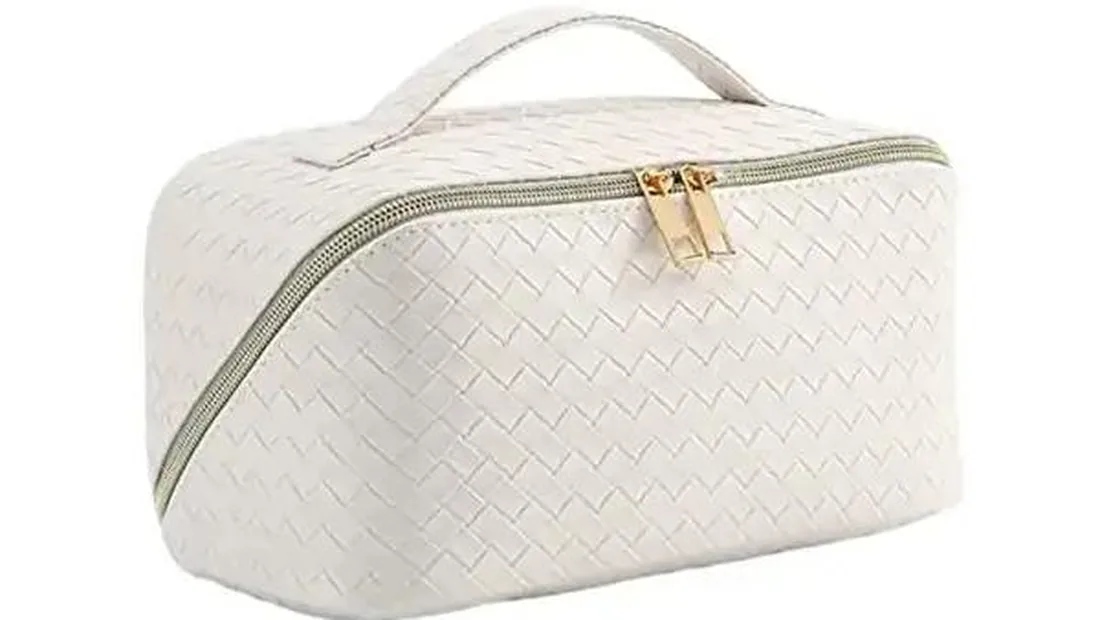
A travel packing system is a coordinated range of organizers that share fabric, colorway and logo treatment. It is not one cube. It is a family: cubes, compression cubes, shoe bags, garment cubes, laundry pouches and accessory pouches. All of them built from the same approved material and color standard, so they read as one product on a shelf and in a product photo.
Say a brand comes to a factory with a single best-selling cube. The next question is always the same. How does that one item become a range a buyer can merchandise? That's what this guide covers, from piece counts to spec control.
What a travel packing system actually is
A packing cube system is sold as one SKU family with several set sizes. A buyer can build a range instead of ordering one item. The pieces usually fall into a small number of roles: cubes for folded clothing, compression cubes for bulky or compressible items, shoe bags, garment or shirt cubes, laundry pouches, and accessory pouches for cables, toiletries or small loose items.
Each role exists because a traveler separates contents. Shoes shouldn't touch clean shirts. Dirty laundry shouldn't touch clean anything. Cables shouldn't tangle with socks. The system answers those separations with distinct pieces rather than one compartment.
Two things make it a system rather than a bag of unrelated SKUs. First, shared material and color. Second, shared construction language: the same zipper, the same puller, the same trim, the same logo placement. If those drift between pieces, the range stops reading as a set.
Cube sizes and set counts: building a 3 to 9 piece range
Piece count maps to a set story. A small entry set of three pieces is the trial size. A mid set of five or six is the mainstream offer. A nine-piece travel organizer set sits at the top of the range and carries the full story for a buyer who wants everything.
Each size in the set needs a defined role so pieces do not overlap. If two cubes in the same set hold the same volume of the same clothing, the buyer sees redundancy, not value. The cleaner approach is to assign each size a job. A small cube for undergarments. A medium cube for shirts. A large cube for trousers or a jacket. A slim cube for flat items.
How to decide the piece count
Don't decide piece count from personal packing habits. Decide it from the retail price band and the shelf story. A brand selling into a value channel needs a tight, low-piece-count set the buyer can price sharply. A brand selling into a gifting or premium channel can carry a larger set, because the perceived completeness justifies the shelf position.
The practical pattern is one core set plus add-on pieces. That keeps the SKU count manageable while still letting a retailer build a fuller range. Add-ons also give a retailer a reason to reorder. They sell a core set, then add the shoe bag or the laundry pouch as a separate line item.
Compression cubes versus standard cubes in one range
A compression cube and a standard cube do different jobs. A standard cube organizes. A compression cube organizes and reduces volume. The compression version uses a second zipper that pulls the top and bottom panels together after the cube is loaded, taking up fabric that would otherwise stay open as depth.
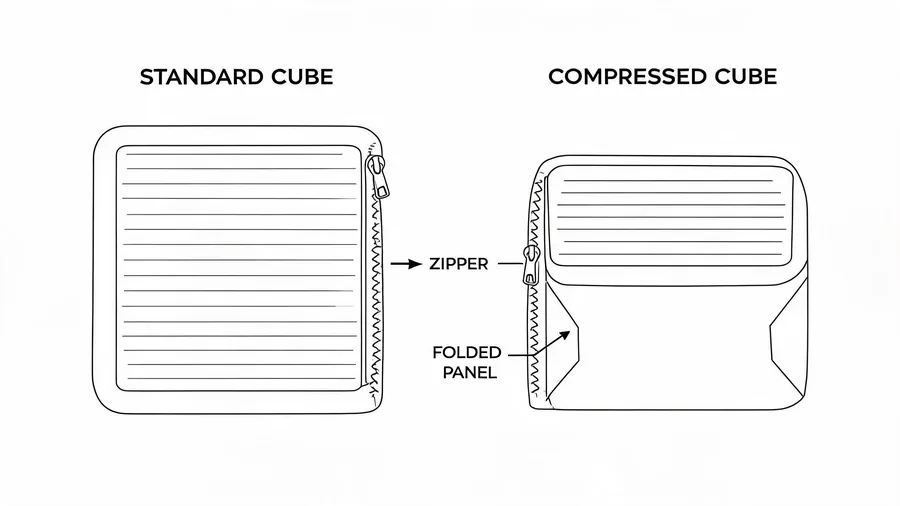
That difference matters to different buyers and different trip lengths. A short-trip traveler rarely needs compression. A long-trip traveler packing bulky layers usually does. Carrying both in one range lets a retailer cover both without stocking two unrelated product lines.
Both versions should share the same fabric and colorway. If the compression cube uses a different shell material or a different shade, the range breaks apart visually. Keep the shell, the liner, the zipper tape and the puller consistent. Let the compression gusset be the only structural difference.
Shoe bags, garment cubes and laundry pouches: the supporting pieces
A shoe bag keeps footwear separate from clothing. A garment or shirt cube holds folded shirts or a folded jacket in a flatter format. A laundry pouch isolates used items. An accessory pouch handles cables, chargers or toiletries.
These are the pieces that turn a cube set into a full travel organizer set. Without them, the range is a stack of similar boxes. With them, the range tells a complete story: everything a traveler separates has a home.
Reuse the same trim, zipper and logo treatment across every piece. A shoe bag with a different zipper pull than the cubes looks like a different product, even if the fabric matches. Standardize the hardware once and repeat it.
Keeping one fabric, colorway and logo across the whole range
Consistent fabric, colorway and logo placement drive shelf recognition. A shopper scanning a wall of travel accessories recognizes a family before reading a single label. That recognition is built from repetition, not from any single clever piece.
Color control is where ranges fail. A color standard and a lab dip approval keep every piece on the same color. The lab dip is a small dyed material sample submitted for approval before bulk production. Approve it once, then hold every piece in the range to that approved reference.
Logo process and placement should be specified once and repeated. If the cube uses a woven label at the front seam, the shoe bag uses the same woven label at the same relative position. Changing the process between pieces, even for a small piece, costs the family its visual consistency.
| Piece | Primary role | Carries compression? | Shares fabric and trim? |
|---|---|---|---|
| Standard cube | Organizes folded clothing | No | Yes |
| Compression cube | Organizes and reduces volume | Yes | Yes |
| Shoe bag | Isolates footwear | No | Yes |
| Garment or shirt cube | Holds flatter folded items | No | Yes |
| Laundry pouch | Isolates used items | No | Yes |
| Accessory pouch | Holds cables and small items | No | Yes |
Specifying the system so every piece matches
A tech pack and a bill of materials keep every piece in the range aligned. The tech pack is the controlled product specification: dimensions, materials, construction details, artwork, labels, packaging and test requirements. The bill of materials lists every material, component, quantity, color and supplier reference needed for one product.
The specification sheet should define dimensions, tolerances, materials and packaging for each piece. Tolerances matter here more than in a single-item order, because a set is judged as a group. If one cube runs slightly large against its nominal value, the set looks inconsistent even when each piece is within its own tolerance.
A golden sample and a pre-production sample lock the range before bulk production. The pre-production sample is made with the intended bulk materials and approved methods. The golden sample is the approved physical reference used to compare production workmanship and appearance. Approve both, then hold production to them.
Change control protects the range when one piece is revised. Change control is the documented approval process for revisions to materials, patterns, construction, artwork, tests or packaging. If a brand revises the compression cube, that change must be checked against every other piece in the family before it ships.
What to standardize and what to vary
Standardize the shell fabric, the liner, the zipper brand and size, the puller, the trim color and the logo process. Vary the dimensions, the gusset geometry and the internal pocket layout. Those variations are what give each piece its role. Everything else should repeat.
When you write the spec, treat the family as one product with several configurations, not several products that happen to share a shelf.
What to send when you want a quote
Prepare a short brief before you approach any supplier. It should cover intended set sizes, piece count per set, target fabric and weight, colorway, logo treatment and packaging format.
Fabric options to consider: nylon is available in 110, 160, 180, 220 and 240, 280 gsm weights (base, 420D, 600D), polyester in 190T, 210T, 300T, 600D and 1200D, canvas in 8, 10, 12 and 15 oz, with rPET as an option. Pick one and hold the whole range to it.
Ask any supplier for the same three things regardless of who you choose: the test method and acceptance limits they will use, the sample size and conditioning for those tests, and the report format you will receive. If a supplier can't name the test method in writing, treat that as an open question, not a settled one.
Start with the packing cube sets range for set-size reference, and look at the 9-piece travel organizer set as the top of the range. Related reading: the packing cube set guide, the packing cubes size guide and the compression packing cubes guide.
Send a spec through the linked pages and a quote can be built around your set sizes, fabric choice and logo treatment.
Frequently Asked Questions
What is the best packing method for travel?
There is no single best method, because the right method depends on trip length, the contents and how much space you have. What matters for a sellable range is that the pieces support the common methods: rolling, folding flat and separating by category. A system that offers a flat cube, a deep cube and a compression cube lets a traveler pick the method that fits the trip.
What is the 3-3-3 rule for travel packing?
The 3-3-3 rule is a consumer packing guideline that suggests packing three tops, three bottoms and three pairs of shoes for a short trip. It is a personal packing habit, not a product specification. For a brand, the useful takeaway is that a small set of three pieces covers a short trip, which is why a 3-piece entry set is a sensible starting point for a range.
What is the 3-5-7 rule in packing?
The 3-5-7 rule is another consumer guideline: three tops, five bottoms or accessories and seven items in total, depending on how the rule is stated. Like the 3-3-3 rule, it describes personal packing behavior rather than a product requirement. It is a useful signal for set sizing, because it suggests a small piece count can serve a real trip.
How many pieces should a travel organizer set have?
Piece count should follow the retail price band and the shelf story, not personal packing habits. A small entry set of three pieces serves a value or trial position. A mid set of five or six is the mainstream offer. A nine-piece set carries the full story at the top of the range. Many brands run one core set plus add-on pieces rather than several unrelated SKUs.