Shirt Packing Cubes: Sizing and Construction
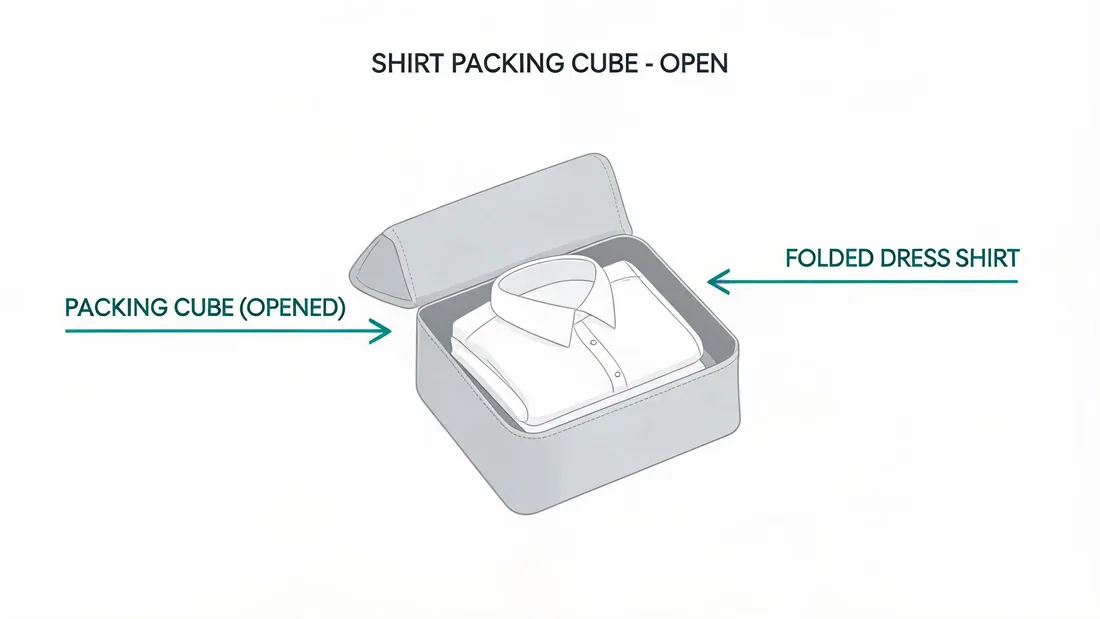
A shirt packing cube is not a standard cube with a different label. It has to hold a folded dress shirt without turning it into a wrinkled mess. The internal dimensions, the folding board, the lining, and the lid all work together. Miss one and the product fails in the buyer's suitcase.
You're probably sourcing these because a general cube doesn't protect a shirt. That's fair. A general cube holds socks and underwear well. A shirt needs more. It needs a flat base. It needs a fold guide. It needs a lid that holds the stack without crushing it. This guide covers the sizing and construction decisions you'll face when you spec a shirt packing cube for your line.
What a Shirt Cube Has to Do Differently
A standard packing cube is a soft fabric box. You stuff it. You zip it. Done. A shirt cube is closer to a portable shelf. The shirt lays flat. The cube controls the fold. The lid keeps everything in place.
Think about what happens to a shirt inside a normal cube. It slides. It shifts. The corners fold over. By the time the traveler arrives, the shirt looks like it was packed by someone in a hurry. A shirt cube fixes this with three things. First, a rigid or semi-rigid folding board. Second, a low-friction lining that doesn't catch the fabric. Third, a lid or panel that presses down gently instead of crushing.
Imagine a buyer who sells travel accessories to consultants. Their customers fly twice a week. They open a cube and need a shirt that's ready for a meeting. That buyer won't accept a cube that creases collars. They'll ask you about the board stiffness and the lining finish before they ask about price.
Internal Dimensions That Match a Folded Dress Shirt
The sizing starts with the shirt, not the suitcase. A folded dress shirt has a predictable footprint. It's wider than it is deep. The cube should match that footprint closely. Too much extra room and the shirt shifts. Too little and the user fights the zipper.
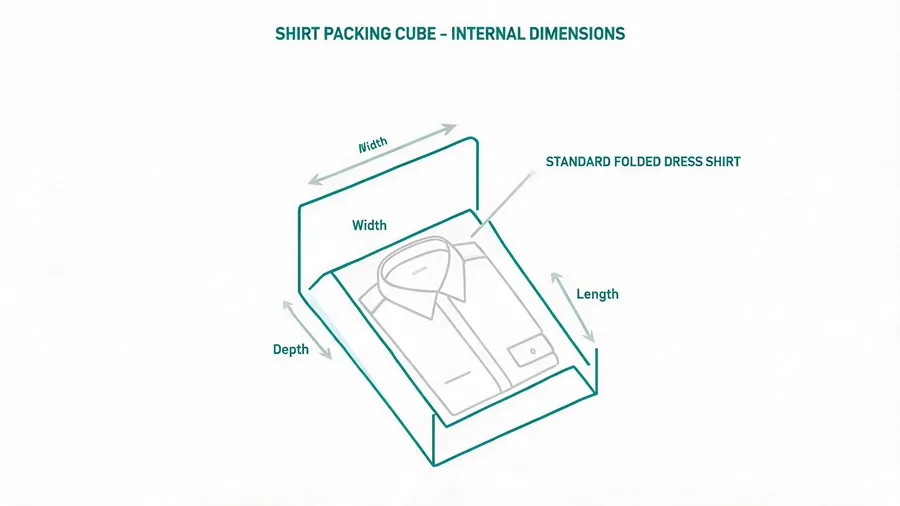
You'll see a lot of variation in folded shirt sizes across brands and shirt sizes. A medium shirt folds smaller than an extra large. A slim fit folds tighter than a classic fit. The cube has to accommodate the range your buyer targets. Ask your factory to show you the folded dimensions for the shirt sizes your customer cares about. Then add a small margin for the board and the fabric stack.
Here's a practical sizing table based on common folded shirt blocks. Use it as a starting point, not a spec you copy blindly. Your factory should confirm the numbers against your own folded shirt samples.
| Cube size | Internal length | Internal width | Internal depth | Fits |
|---|---|---|---|---|
| Small | 30 cm (11.8 in) | 22 cm (8.7 in) | 6 cm (2.4 in) | 1-2 slim fit shirts |
| Medium | 35 cm (13.8 in) | 25 cm (9.8 in) | 8 cm (3.1 in) | 2-3 classic fit shirts |
| Large | 40 cm (15.7 in) | 30 cm (11.8 in) | 10 cm (3.9 in) | 3-4 shirts or shirts plus a light sweater |
Depth is where most brands go wrong. A cube that's too deep invites overpacking. The user stuffs in an extra shirt. The lid bulges. The zipper strains. Keep the depth modest. The cube should hold a stack, not a pile.
The Folding Board and Fold Guide
The folding board is the heart of a shirt cube. It's not a luxury add-on. It's the reason the product works. The board gives the shirt a flat surface to fold against. It also gives the cube structure.
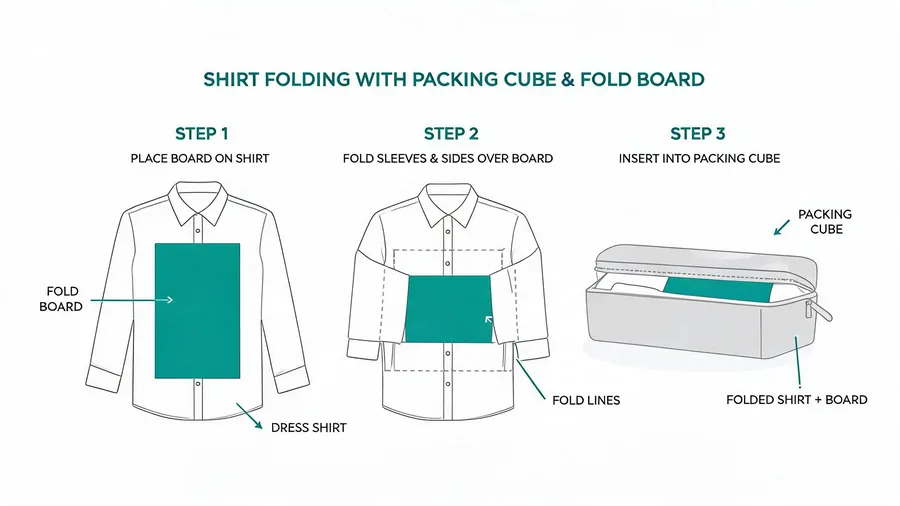
You have a few material choices for the board. A thin plastic sheet is common. It's light and cheap. A fiberboard insert feels more premium but adds weight. Some brands use a dense foam board for a softer hand. The board should be stiff enough to fold a shirt on but thin enough to disappear into the cube.
The fold guide is simpler. It's usually a printed line, a stitch line, or a small flap that shows the user where to fold. Some cubes print the guide directly on the board. Others print it on the lining. The guide removes guesswork. That matters for a travel product. Nobody wants to think hard at 6 a.m. in a hotel room.
Ask your factory whether the board should be removable. A removable board lets the user wash the cube. A sewn-in board stays put but makes the cube harder to clean. Both approaches sell. The choice depends on your brand's price point and the story you tell.
Low-Friction Lining That Doesn't Crease Fabric
The lining is where a shirt cube wins or loses. A rough lining grabs the shirt. The fabric bunches. Creases set in. A smooth lining lets the shirt slide into place and slide out without catching.
Polyester taffeta is a common choice. It's smooth, cheap, and easy to sew. Nylon is another option. It's slicker but pricier. Some brands use a coated lining for water resistance. The coating shouldn't feel sticky. It should feel dry and fast.
The lining also needs to be colorfast. A shirt that rubs against a dyed lining can pick up color. That's a warranty claim waiting to happen. Test the lining for crocking before you approve it. The test is simple. Rub a white cloth against the lining and see if color transfers. Your factory should do this as part of the pre-production sample approval.
Don't overthink the lining. It doesn't need to be fancy. It needs to be smooth, stable, and colorfast. That's the whole job.
Lid and Closure Options
The lid on a shirt cube has one job. It holds the stack flat. It should not crush the shirts. A soft lid that sags lets the top shirt slide. A hard lid that presses too firmly creases the collar. The right lid is somewhere in between.
Most shirt cubes use a zipper lid. The zipper runs around three sides or four. A three-sided zipper leaves one edge attached like a hinge. That's easier to pack. A four-sided zipper lets the lid come off completely. That's easier to clean. Both work.
Some cubes add a compression strap or a second zipper. This is where a shirt cube overlaps with a compression packing cube. The compression feature pulls the lid down. It saves space. But it also adds pressure. Too much pressure and you've defeated the purpose. If you add compression, spec a gentle compression ratio. The user should feel the lid tighten, not the shirts flatten.
Closure hardware matters too. A zipper that catches the lining is a daily annoyance. Ask your factory whether a #5 or #8 nylon coil zipper suits the design. The right size depends on the cube's depth, the fabric thickness, and how often the user opens and closes it. Let the factory recommend the size after they see your sample. Don't guess.
Fabric Choices That Resist Creasing
The shell fabric doesn't touch the shirt directly. Not usually. But it still affects how the cube behaves. A stiff shell holds its shape. A soft shell collapses. For a shirt cube, you want a shell that stands up on its own.
Polyester is the workhorse. It's stable, printable, and available in a huge range of weights. A 600D polyester shell gives the cube structure without adding much weight. Nylon is lighter and stronger but costs more. Canvas adds texture and a premium feel. It's heavier though.
Think about how the cube sits in a suitcase. A shirt cube usually goes on top of the pile. It's the last thing the user packs. So it needs to hold its shape when the suitcase is full. A floppy shell means the cube gets squished into a corner. The shirts inside get squished too.
You can also compare a shirt cube to a vacuum packing cube. Vacuum cubes remove air. Shirt cubes remove wrinkles. Different jobs. Some brands sell both. They solve different problems for the same traveler.
How the Cube Relates to Carry-On Interior Dimensions
Most shirt cubes end up in carry-on luggage. That's the whole point. The traveler wants to arrive with a shirt that doesn't need ironing. So the cube has to fit the suitcase.
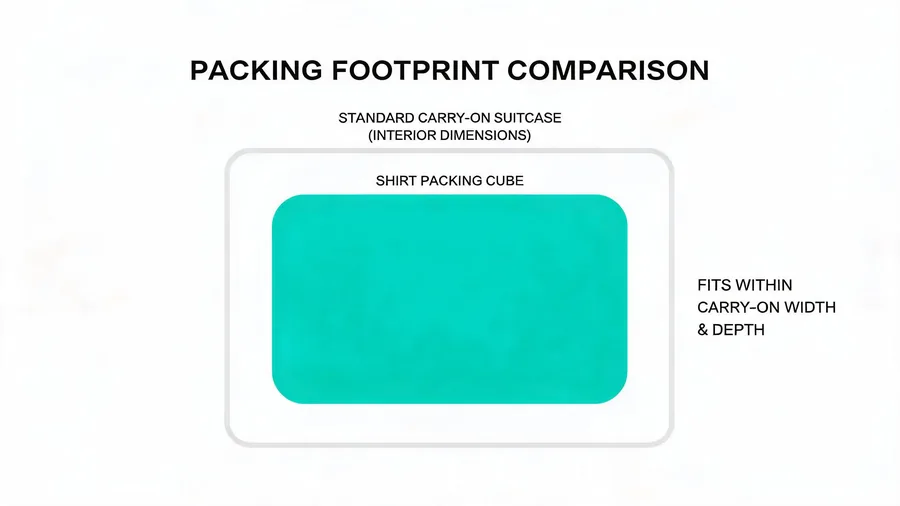
Carry-on luggage varies by airline and by bag brand. There's no single interior dimension you can build to. But the cube should be small enough to sit flat in a typical 22-inch carry-on. That usually means the cube's length should stay under about 40 cm (15.7 in). The width should stay under about 30 cm (11.8 in). Those aren't hard rules. They're a working range.
Check the current guidance from the airline or the bag manufacturer before you lock your spec. The cube should also work in a larger checked bag. A shirt cube that's too small for a checked bag is useless for a two-week trip. So design for the carry-on first. The checked bag will take care of itself.
If your buyer sells packing cubes for backpacks, the sizing changes. Backpacks are narrower and taller. The cube has to fit the pack's width. That's a different conversation. Don't assume one cube works for both.
Construction Checklist for a Shirt Packing Cube
Here's what to check before you approve a pre-production sample. Print this list. Send it to your factory. Walk through every line.
- Internal dimensions match the folded shirt block, not just the suitcase.
- Folding board is stiff enough to fold on, thin enough to pack.
- Fold guide is visible and aligns with the board edges.
- Lining is smooth, colorfast, and sewn without puckers.
- Lid closes flat without sagging or over-compressing.
- Zipper runs smoothly and doesn't catch the lining.
- Corners are reinforced where the board meets the shell.
- Seams are bound or finished so raw edges don't fray into the shirt.
- Cube fits flat in a standard carry-on test jig.
- Care label is sewn in and legible.
That's the whole product. A shirt packing cube is a simple thing. It's a board, a smooth lining, and a lid that doesn't crush. Get those three right and you have a product that earns repeat orders. Get them wrong and you have a box that wrinkles shirts.
Shirt Cube vs. General Cube vs. Garment Folder
Buyers ask this all the time. Why not just sell a general cube? Why not a garment folder? The answer is about the job the product does.
A general cube organizes. It doesn't protect. A shirt cube protects. It's built around the shirt. A garment folder is a different tool. It's usually a folding board with flaps that wrap the shirt. It's more structured than a cube. It's also bulkier and heavier.
Here's the comparison.
| Feature | General packing cube | Shirt packing cube | Garment folder |
|---|---|---|---|
| Primary job | Organize clothes | Protect folded shirts | Fold and compress shirts |
| Folding board | No | Yes, semi-rigid | Yes, rigid |
| Lining | Basic | Low-friction | Often coated or smooth |
| Weight | Light | Medium | Heavier |
| Best for | Socks, underwear, casual clothes | Dress shirts, blouses, collared shirts | Suits, formal shirts, longer trips |
The shirt cube sits in the middle. It's more protective than a general cube. It's lighter and softer than a garment folder. That's a real position in a travel line. A buyer who sells general cubes can add a shirt cube as the step-up product. A buyer who sells garment folders can add a shirt cube as the lighter travel option.
What to Ask Your Factory Before You Order
Don't spec this product in a vacuum. Send your factory a folded shirt. Send them the suitcase you want the cube to fit. Then ask these questions.
- Can you match the internal dimensions to this folded shirt block?
- What board material do you recommend for this price point?
- Is the board removable or sewn in?
- What lining do you recommend for low friction and colorfastness?
- Can you show me a compression version that doesn't over-compress?
- What zipper size do you recommend for this depth?
- Can you provide a sample with the fold guide printed on the board?
One more thing. Don't skip the care label. A shirt cube gets washed. The user spills coffee on it. The label has to survive the wash. Test it. A label that fades in three washes is a quality problem you'll hear about in reviews.
A shirt packing cube is a small product with a specific job. It's not a general cube with a new name. It's a board, a smooth lining, and a lid that respects the shirt. Build it that way and your buyer will come back. That's the whole game.
Frequently Asked Questions
What size should a shirt packing cube be?
Start with the folded shirt, not the suitcase. A medium cube around 35 x 25 x 8 cm fits two to three classic fit shirts. Confirm the dimensions against your own folded shirt samples before you lock the spec.
Does a shirt packing cube need a folding board?
Yes. The board is what makes the cube work. It gives the shirt a flat surface to fold against and keeps the cube from collapsing. You can use plastic, fiberboard, or dense foam depending on your price point.
What lining prevents shirt creases?
A smooth polyester taffeta or nylon lining works best. The lining should let the shirt slide without catching. It also needs to be colorfast so the dye doesn't rub onto the shirt.
Can a shirt packing cube fit in a carry-on?
Usually yes. Keep the length under about 40 cm and the width under about 30 cm. Check the current airline guidance and your buyer's specific suitcase interior before you finalize the size.