How to Use Packing Cubes: Methods That Actually Save Space
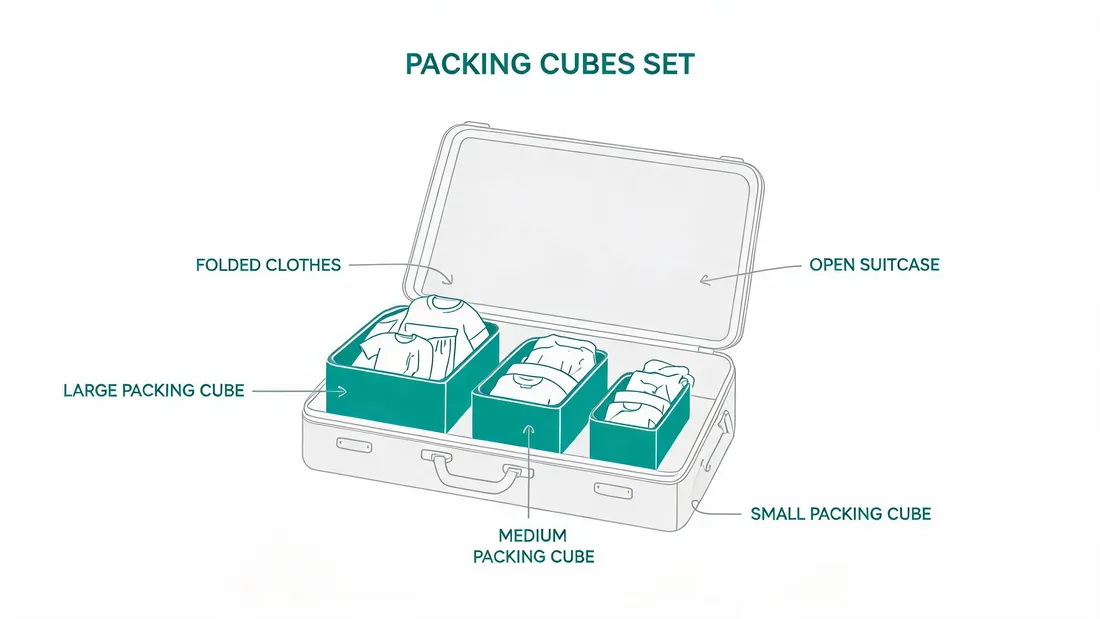
You bought a set of packing cubes. Now you're staring at them on the bed, wondering how to use packing cubes so they actually save space instead of just moving the mess into smaller bags. Fair question. Most people get this wrong the first time.
Packing cubes are fabric organizers with zippers. They hold clothing, separate categories, and compress soft items. But the cube itself does not pack your clothes. You do. The method matters more than the cube.
Roll vs Fold: The Two Methods That Actually Work
There are two real ways to load a packing cube. Rolling and folding. Everything else is a variation of one of these.
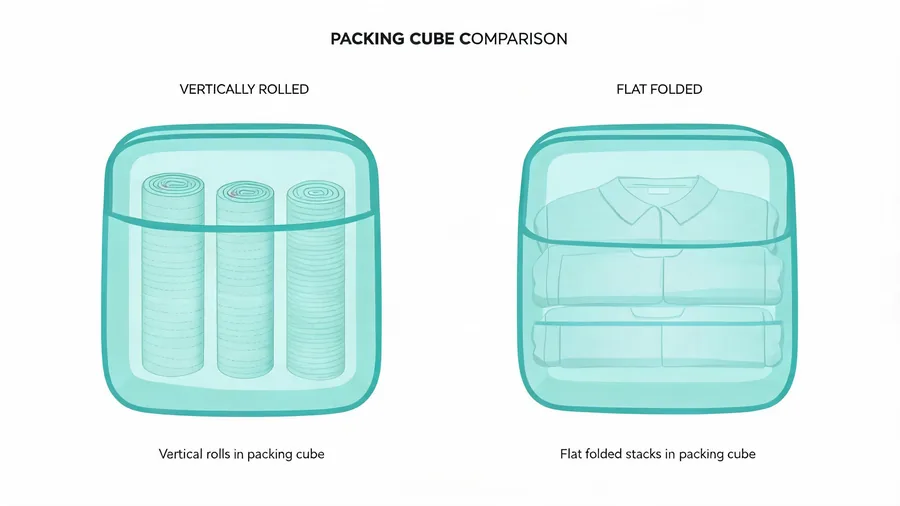
Rolling wins for soft, flexible clothing. T-shirts, underwear, socks, leggings, gym shorts. Roll each item tightly, then place the rolls side by side in the cube. This removes air gaps and lets you see every item through a mesh top panel. Rolling also reduces wrinkles on knit fabrics. It's the method I recommend for most travelers.
Folding wins for structured clothing. Button-down shirts, chinos, blazers, anything that creases badly when rolled. Fold these items to the cube's footprint, stack them flat, and use the cube's structure to keep the stack neat. A folded stack in a cube travels better than a folded stack loose in a suitcase because the cube walls stop the stack from sliding.
Say you're packing for a three-day business trip. Roll your undershirts and socks. Fold your two dress shirts flat on top. That's not a compromise. That's using the right method for each fabric.
Some people roll everything. Some fold everything. Both camps are wrong. The best packers switch methods inside the same cube.
How to Assign Cubes: Category, Outfit, or Day
You have three ways to divide your clothing across cubes. Each has a purpose.
By category is the classic method. One cube for shirts. One for bottoms. One for underwear and socks. One for accessories. This works best when you're staying in one place and unpacking into drawers. You open the shirt cube, put shirts in the drawer, done.
By outfit means each cube holds one complete outfit. Shirt, pants, socks, underwear, maybe a belt. This is the method for people who hate decisions in the morning. You grab one cube and you're dressed. It also works well for kids. One cube per day per child.
By day is a variant. Cube one is Monday and Tuesday. Cube two is Wednesday and Thursday. This is overkill for most trips. Use it when you're moving hotels every night and don't want to open every cube at every stop.
The point is consistency. If you always put socks in the same cube, you stop digging. That's the whole game.
Imagine a traveler who packs by category but never unpacks. Every morning they open three cubes to find one outfit. That's wasted time. A buyer who packs by outfit opens one cube and moves on. Same cubes, different workflow.
Compression Cubes: What They Do and What They Don't
A compression cube has a second zipper that pulls the top and bottom panels closer after the cube is loaded. Read our compression packing cubes guide if you want the full mechanics. Here's the short version.
Compression saves volume. It does not reduce weight. Your clothes weigh the same whether they're rolled, folded, or squeezed. If your bag is overweight, compression cubes will not fix that. If your bag is overfull, they might.
Compression works best on bulky, airy items. Sweaters, hoodies, puffer jackets, towels. It does almost nothing for dense items like jeans or shoes. Squeezing a pair of jeans just makes a slightly thinner pair of jeans.
There's a tradeoff. Compression adds wrinkles to anything that can wrinkle. Use compression cubes for casual clothing, not for dress shirts. For a comparison of compression bags and cubes, see this breakdown.
Say you're flying with a carry-on only. You pack a compression cube with four sweaters. The cube shrinks by maybe a third. That's real space. Now you can fit your toiletry bag on top. That's how compression earns its place.
Sizing a Set to Your Bag
Cube sizes are not standardized. One brand's medium is another brand's large. So measure your bag before you buy. Or use the cube dimensions and compare them to your bag's interior.
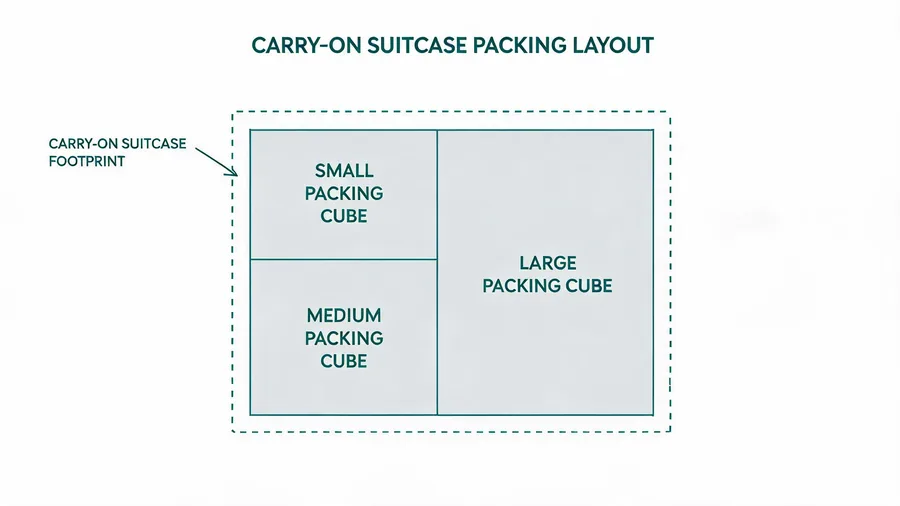
For a carry-on roller, a common setup is two medium cubes and one small cube. For a larger checked bag, you might run three medium cubes, one large cube, and a slim cube for dirty clothes. These are examples, not rules. Your clothing volume decides the real count.
A medium cube typically holds roughly four to six days of clothing plus toiletries and tech, depending on fabric bulk. A large cube in a checked bag can hold roughly ten to fourteen days of clothing plus shoes and bulky layers. A small cube holds roughly three to five days of clothing, packed vertically. These are rough guides. Denim takes more space than merino.
See our packing cube size guide for a deeper look at dimensions and capacity.
Don't overfill a cube. A cube that's bursting at the zipper is harder to pack into a bag and puts stress on the seams. Leave about ten percent slack. The cube should feel firm, not drum-tight.
The Laundry and Dirty-Clothes Workflow
This is where most packing cube systems fall apart. You pack clean clothes in cubes. Then you wear them. Now you have dirty clothes and no plan.
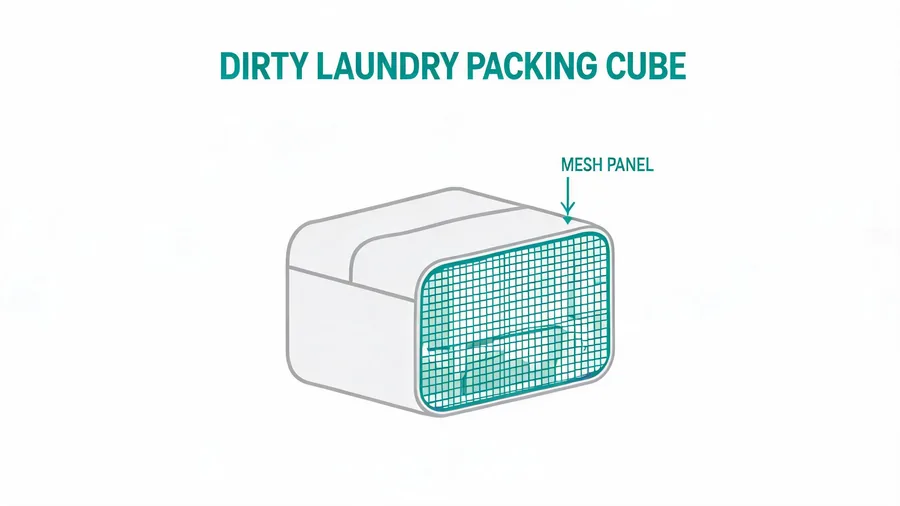
The fix is a dedicated dirty cube. A slim, breathable cube that starts empty and fills as the trip goes on. When a cube of clean clothes empties, it becomes the next dirty cube. You cycle through.
Mesh panels help here. A dirty cube with mesh lets odors out and lets you see which cube is dirty without opening it. Solid panels trap moisture and smell. For a week-long trip, one slim mesh cube is usually enough. For two weeks, bring two.
Some travelers use a compression cube for dirty clothes. That works. Squeeze the air out of worn clothing and reclaim space in your bag. Just don't put damp clothes in a compression cube. You'll trap moisture and create a mold risk.
Carry-On Tactics That Actually Work
Carry-on packing is a different game. Space is tighter. Weight limits are real. And you have to pull items out at security without destroying your system.
Pack cubes vertically when you can. Stand them on edge like files in a drawer. This lets you pull one cube out without disturbing the others. It works best in a clamshell suitcase or a backpack with a full-zip opening.
Keep your liquids and electronics in a separate pouch outside your clothing cubes. You'll need to pull them at the checkpoint. Don't bury them under three cubes of shirts.
If you're using packing cubes for backpacks, match the cube width to your pack's opening. A cube that's wider than the opening is useless. You'll have to unpack it outside the bag.
One more thing. Weight. Carry-on limits vary by airline. Check your carrier's current rules before you pack. Compression cubes don't change weight, so don't use them to sneak more into a bag that's already heavy.
What to Look for in Cube Construction
Cheap packing cubes fail in predictable ways. Zippers split. Seams tear. Mesh snags. Fabric delaminates. Here's where to look.
Mesh vs solid panels. Mesh lets you see contents and lets air move. Solid panels protect against dust and moisture. A good cube uses mesh on top and solid fabric on the bottom. Avoid cubes with mesh on every panel. They're flimsy.
Zipper type. Look for a smooth, self-healing zipper with a sturdy pull. Cheap zippers catch on the fabric and fail at the corners. Test the zipper before you buy. It should run the full length without snagging.
Seam finish. The seams take the most stress. Look for bound or double-stitched seams. If the seam is a single line of loose stitching, the cube will blow out at the corners within a few trips.
Fabric weight. Lightweight ripstop nylon is fine for casual use. Heavier polyester or canvas lasts longer. The fabric should feel substantial, not like a grocery bag.
| Feature | Cheap Cube | Quality Cube |
|---|---|---|
| Zipper | Thin, snags on fabric, fails at corners | Smooth, self-healing, sturdy pull |
| Seams | Single stitch, raw edges | Bound or double-stitched |
| Mesh | Snags easily, tears at stress points | Tight weave, reinforced edges |
| Fabric | Thin, feels like a grocery bag | Substantial ripstop or canvas |
| Shape | Collapses, loses structure | Holds its footprint when packed |
Packing cubes don't fail because of bad luck. They fail because of cheap zippers and single-stitch seams. Spend a little more. You'll replace them less often.
For a broader look at how cubes compare to vacuum bags, see this guide. If you're ready to spec a set, start at our packing cubes collection.
Frequently Asked Questions
Here are the questions I hear most from travelers who are new to packing cubes.
Do packing cubes actually save space?
Yes, but not by magic. They save space by removing air gaps and keeping items compressed in a fixed footprint. Rolling plus cubes saves more space than rolling alone. Compression cubes save the most volume, but only on bulky items.
Should I roll or fold clothes in packing cubes?
Roll soft knits like t-shirts and socks. Fold structured items like dress shirts and chinos. Use both methods in the same cube when the clothing mix calls for it.
How many packing cubes do I need for a week?
Most travelers do fine with three cubes: one medium for tops, one medium for bottoms, and one small for underwear and socks. Add a slim mesh cube for dirty clothes if you're not doing laundry mid-trip.
Do compression packing cubes reduce weight?
No. Compression reduces volume, not weight. Your clothes weigh the same. If your bag is over the airline's weight limit, compression cubes won't help.
Frequently Asked Questions
Do packing cubes actually save space?
Yes, but not by magic. They save space by removing air gaps and keeping items compressed in a fixed footprint. Rolling plus cubes saves more space than rolling alone. Compression cubes save the most volume, but only on bulky items.
Should I roll or fold clothes in packing cubes?
Roll soft knits like t-shirts and socks. Fold structured items like dress shirts and chinos. Use both methods in the same cube when the clothing mix calls for it.
How many packing cubes do I need for a week?
Most travelers do fine with three cubes: one medium for tops, one medium for bottoms, and one small for underwear and socks. Add a slim mesh cube for dirty clothes if you're not doing laundry mid-trip.
Do compression packing cubes reduce weight?
No. Compression reduces volume, not weight. Your clothes weigh the same. If your bag is over the airline's weight limit, compression cubes won't help.